Need a certified translation? USCIS · legal · medical · academic (407) 537-2522 Get a quote →
AI data & language services Quote Request a scope
Solution · Interpretation

Scope interpretation before the session - not during it.

Interpretation fails when the format, setting, qualification requirement, or language expectation is not confirmed before the session. A healthcare appointment, a legal hearing, a government request review meeting, and a business negotiation each carry different requirements for the interpreter - and different consequences when those requirements are not met.

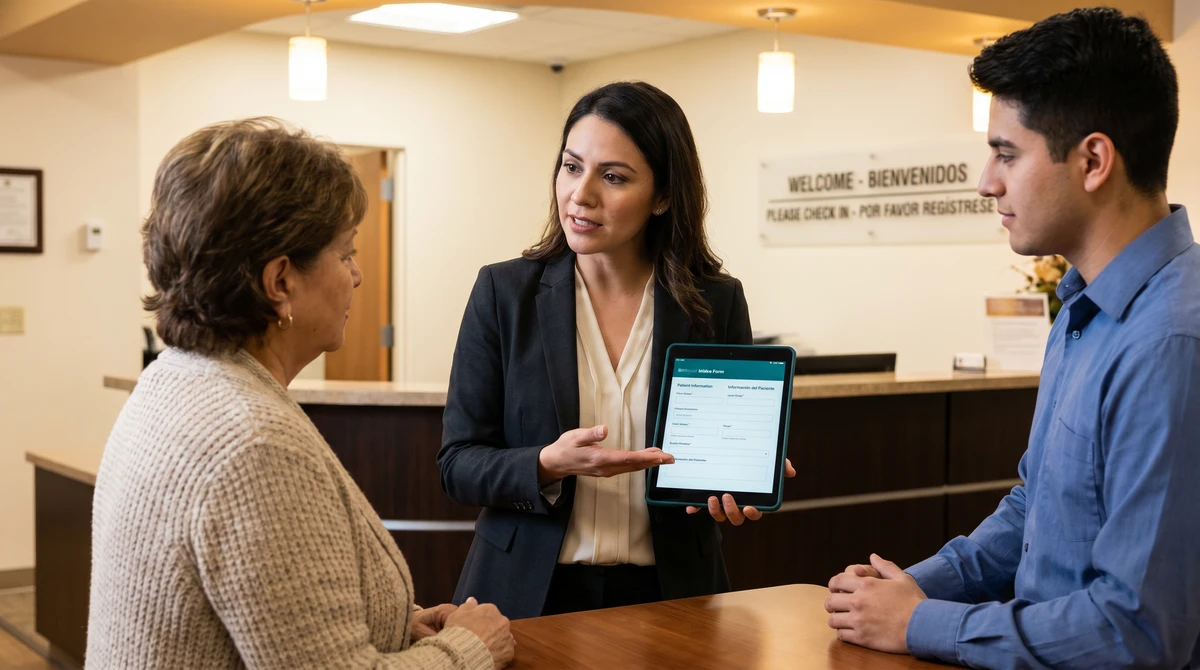
An interpreter mid-session on a video call reviewing bilingual notes
250+ Languages
40,000+ Vetted linguists
Quality controls Documented security handling
1 Named PM per booking
Evidence for review

What DD can show before a buyer commits.

This is not a public case study claim. It is DD-owned evidence a buyer can request when the work needs vendor review before a scope is approved.

Ask for proof details
Buyer type
Interpretation buyer, program owner, or language-company operations lead qualifying DD before sending production files.
Problem
The buyer needs interpretation scoped by work type, languages, inputs, deadline, and review process before a quote is accepted.
Scope
Interpretation across DD language operations with named PM coordination, independent review where applicable, and written scope confirmation.
Constraint
No public DD case study is cleared for this service yet, so proof must use DD-owned process artifacts instead of borrowed claims.
DD action
DD confirms the interpretation scope, assigns the PM contact, separates production from review where relevant, and returns written next steps.
Evidence available
Private proof can include a service start checklist, redacted QA summary format, delivery record format, and sourcing or staffing notes.
Outcome
The buyer can validate fit and operating discipline before sending production files or adding DD to a vendor roster.
Disclosure status
DD-owned proof only. Public client outcomes require approval; redacted process artifacts can be shared when disclosure terms allow.

How DD checks it

What enterprise buyers need from interpretation — and how DD delivers it.

DD matches interpreters after confirming the session details in full: language and modality, date, time, timezone, setting, subject matter, participant count, platform, access needs, and any qualification or credential requirement. That confirmation step protects buyers from mid-session discovery problems and protects the interpreter from a setting they were not prepared for.

A clean interpretation request names the people in the session, the channel, the topic, the moments where accuracy matters most, and any access or credential requirement. DD uses that information to separate phone, video, and on-site needs before confirming linguist availability - and to ensure the interpreter reaches the session prepared, not surprised.

One named program manager owns the engagement from request review through session close. That PM is the single contact for scheduling, confirmations, access setup, escalation, and scope changes. For recurring programs, the PM maintains continuity across sessions - language, modality, setting, and participant flow do not have to be re-explained for each booking.

Uncommon-language interpreter availability is confirmed before a date is committed - not after. For rare or lower-resource languages, DD checks availability, names the lead time needed if the language requires sourcing, suggests alternative modalities where appropriate, and flags any situations where the timeline is too tight to staff correctly. buying teams do not discover a gap when the session is already booked.

For language company under your brand engagements: DD coordinates interpretation under your brand throughout. Session documentation, confirmation records, and any compliance notes are produced to your presentation standards. The sub-vendor model maintains zero client footprint for end clients.

In the tool

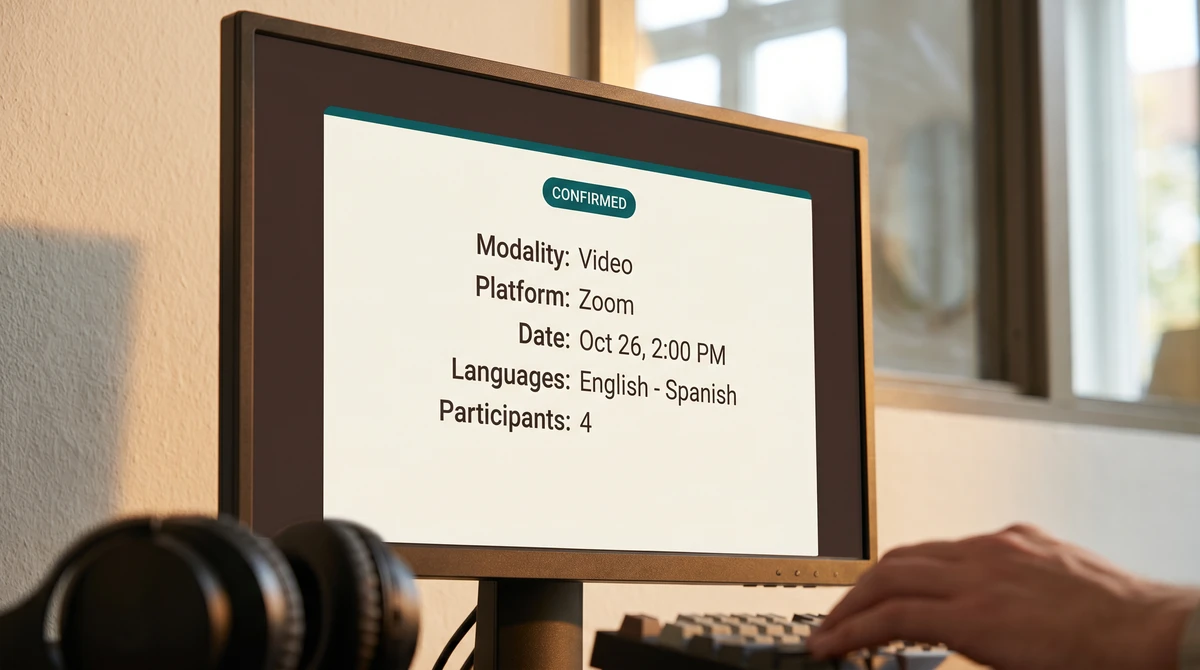
Modality, platform, date, languages, and participant count confirmed before the date is committed.

A close-up of an interpretation confirmation screen showing modality, platform, date, language pair, and participant count, with a confirmed status badge

Step by step

  1. Share the session details

    Send language, modality (phone, video, or on-site), date, time, timezone, setting, subject matter, participant count, and any qualification or access requirement.

  2. Availability and scope confirmed

    DD checks interpreter availability before a date is committed — not after. Uncommon-language lead times and alternative modalities are named in the reply if relevant. You receive written confirmation before the booking is placed.

  3. Interpreter prepared for the setting

    The assigned interpreter receives the session context ahead of time: language, setting, subject matter, participants, and any access or confidentiality conditions specific to the engagement.

  4. Session and follow-up documentation

    Confirmation records covering language, modality, date, time, and access notes are available before the session. Post-session documentation is available on request.

Quality and delivery

What buying teams need. What DD structures every engagement around.

Session confirmed before commitment

Language, modality, setting, platform, subject matter, participant count, and access requirements are confirmed at request review — before a date is committed to the interpreter or the client.

One named PM per engagement

The PM owns the booking from scope through session close. Scheduling, confirmations, access setup, and escalation run through one contact. No internal relay between a sales team and a separate coordination team.

Uncommon-language availability confirmed first

DD checks interpreter availability for rare and lower-resource languages before a date is promised. If the language and timeline cannot be safely staffed, that is stated at request review — not discovered on the day of the session.

Confidentiality and access controls

All interpreters operate under NDA for the engagement. For regulated settings — healthcare, legal, government — access, confidentiality scope, and session documentation are confirmed to meet the setting's requirements.

Quality-management controls Information-security controls Independent certification held for quality and information-security controls

How this compares

ConsiderationTypical vendorDynamic Dialects
  • Availability checkDate committed first, availability checked after (or assumed)Availability confirmed before any date is committed to the client
  • Rare language sourcingGap discovered when the session is already bookedLead time named at the confirmation stage — not on the day of the session
  • Setting preparationInterpreter placed based on language pair onlySetting, subject matter, and access requirements confirmed with the interpreter before the session
  • DocumentationVerbal booking onlyWritten confirmation records before the session; post-session notes available on request
Where this helps

Use this service when the stakes are clear.

  • Healthcare appointments, clinical request review, patient communication, and public health sessions
  • Legal hearings, depositions, client meetings, and court-adjacent proceedings
  • Government request review, community outreach, and public sector service meetings
  • Business negotiations, board sessions, HR meetings, and multilingual staff communication
  • Uncommon and rare language availability checks before dates are promised to a client
What to send first

Four details start the scope.

  1. Language, modality (phone, video, on-site), and session date
  2. Setting, subject matter, and participant count
  3. Platform or location details and any access requirements
  4. Qualification, credential, or confidentiality conditions
Check interpreter availability

Send language, modality, date, time, timezone, setting, and any qualification or access requirements. DD returns availability confirmation and PM assignment before you commit the date.


Questions

Common questions before sending project details.

What modalities does DD support for interpretation?

DD supports phone, video, and on-site interpretation. The right modality depends on language, setting, participant count, access needs, platform, topic risk, and whether the session requires a qualification or physical presence.

How does DD confirm interpreter availability for uncommon languages?

DD checks uncommon-language availability before a date is committed. The reply names whether the language is available, the lead time needed for sourcing if applicable, any alternative modalities that are faster to staff.

How are qualification and credential requirements handled?

Qualification and credential requirements are confirmed at request review, not assumed. Send the requirement - subject matter specialization, domain familiarity, or any field-specific expectation - as part of the session request.

Can DD support recurring interpretation programs?

Yes. Recurring programs benefit from the PM continuity model: the same named program manager maintains language, modality, setting, and participant flow across sessions.

What session documentation does DD provide?

DD provides confirmation records - language, modality, date, time, setting, and access notes - before the session. Post-session documentation (availability notes, any escalation records) is available on request.

Can DD coordinate interpretation for regulated or sensitive settings?

Yes. Healthcare, legal, and government settings each have distinct confidentiality and access requirements. DD is familiar with how these sessions must be structured: NDA scope, access controls, no-recording requirements.


Related

Keep moving from the same request.

Dynamic Dialects 200 E Robinson Street, Suite 1120-H16 Orlando, FL 32801 (407) 537-2522 info@dynamicdialects.com Mon-Fri | 8a-7p ET
Send the requirement

Get the right scope in writing.

Share the language pair, file type, audience, or problem. DD replies with availability, open questions, handling notes, and the next step before work starts.

Four fields are enough to start. Add files later if handling needs review.