How DD checks it What enterprise buyers need from localization — and how DD delivers it.
Localization work usually belongs to a product manager, a localization manager, or a market-entry team with a hard release date. DD's request review is designed for those stakeholders: content type, target markets, launch date, UI constraints, screenshots, terminology requirements, and who reviews the output before it ships. That structure keeps linguistic work connected to release readiness - not separated into a translation job that the buyer then has to reconcile with product context.
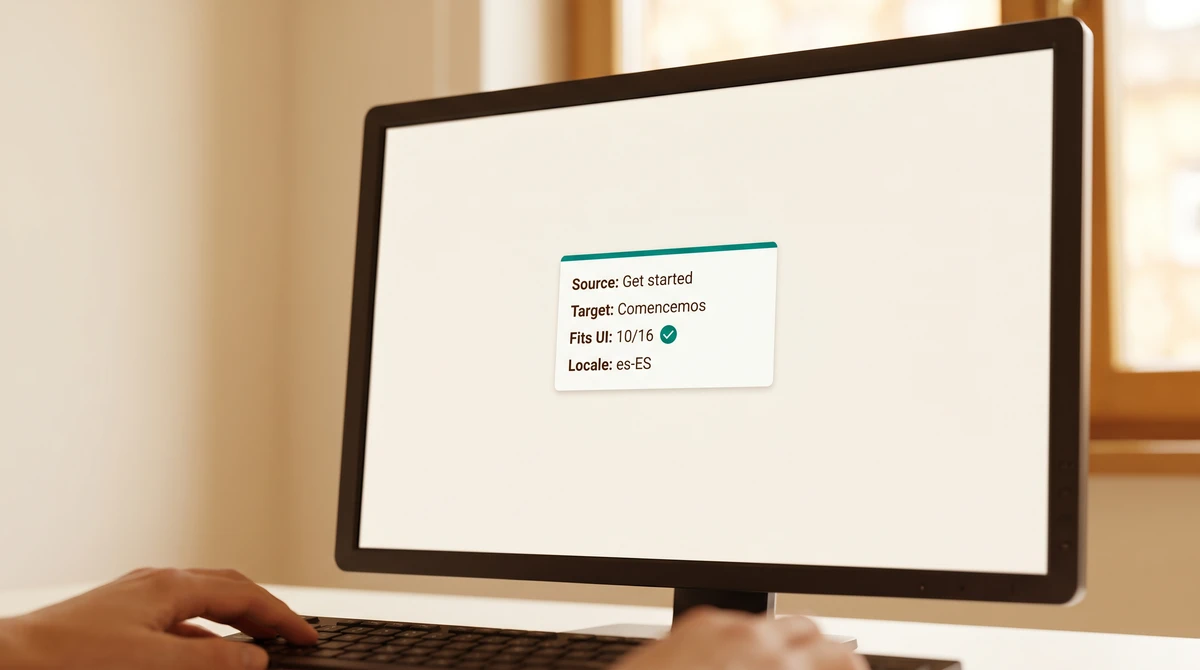
DD reviews the factors that change after translation: character expansion and UI space in strings, market-specific tone and register expectations, screenshot and visual context for UI copy, metadata and navigation labels for website localization, help content that must reflect market-specific flows, and launch dependencies that determine whether the localized output can actually ship on the planned date.
Multi-language programs run under a single contract and a single named program manager. Scaling to additional markets does not introduce new request review processes, new contacts, or new delivery chains. The PM absorbs coordination overhead across all language pairs - one request, one scope confirmation, one delivery point. For ongoing programs, rolling-batch delivery is available: content is received incrementally and returned localized on a defined cadence.
For enterprise buying teams: DD's independent review process applies to localization as it does to translation. The production linguist and the reviewer are always separate people. Error categorization is consistent and documented. review records are available on request. For market-sensitive content - product copy, regulated materials, legal-adjacent marketing - the documented review trail matters as much as the translation quality.
For language company sub-vendor relationships: DD delivers localized content under your brand throughout. Terminology, style, and market-specific review notes are maintained across the engagement. under your brand delivery is the default for partner programs. Test-batch entry is available: submit a sample of your hardest market content and DD returns a production sample before the relationship opens.