
How does DD's translation review process work?
The production linguist and the reviewer are always separate people. The person who completes the translation does not review their own work.
Translation that enterprise teams and language company vendor managers can stand behind requires more than a language match. It requires a review process that is genuinely independent, error categories that are consistent and documented, and a delivery record the buyer can audit if a client questions the output.
This is not a public case study claim. It is DD-owned evidence a buyer can request when the work needs vendor review before a scope is approved.
Ask for proof detailsDD structures every translation engagement around three non-negotiables: the production linguist and the reviewer are always separate people; errors are categorized as critical, major, or minor against a consistent standard aligned with Translation-review controls requirements; and review documentation follows the file - on request, for any project. That process applies whether the request is a legal filing, a clinical summary, a regulatory submission, or product content.
Independent review is the core control. The person who completes the translation does not review their own work. A second qualified linguist checks the output using standardized error categories - critical, major, minor - and documents findings before the PM applies a final quality check. This is not a verbal assurance; it produces a written record.
For certified translation requests, DD reviews the recipient requirements, declaration wording, file type, name spelling, deadline, and agency or evaluator notes at request review - before accepting the project. Format preservation (tables, headings, signatures, stamps, bilingual layout) is reviewed as part of the scope, not treated as an afterthought at delivery.
Human-only workflows are available where contractual requirements prohibit AI-assisted drafting. If the engagement specifies no MT and no AI-assisted production, DD delivers 100% human production with human-in-the-loop final review. AI policy is client-configurable.
For language company sub-vendor relationships: DD delivers under your brand throughout. Your PM, presentation requirements, and client-facing framing are maintained. review documentation and delivery records are available for your own sub-vendor audit trail. delivered under your brand is the default operating model for partner engagements.
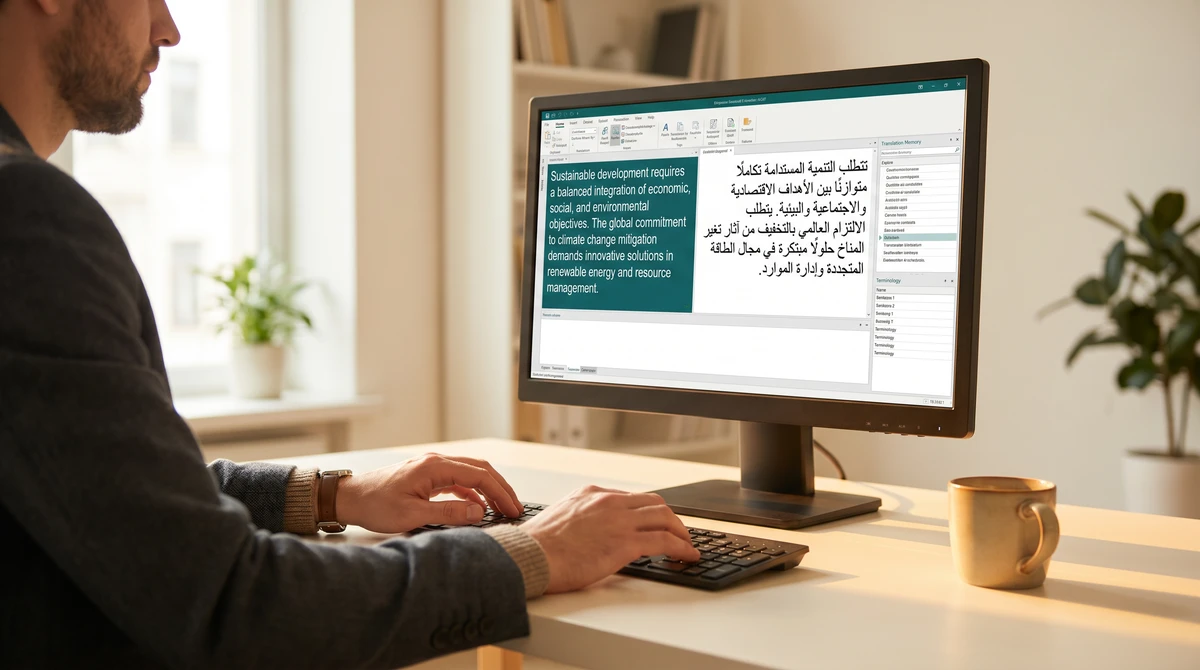
Certified translation confirmed in CAT software — declaration wording and format verified before production begins.

Step by step
Submit the source file, language pair, intended use, and any certification, format, or layout requirements. No standard form required — plain email or the contact form works.
DD reviews the scope, confirms the production plan, and assigns a named program manager. You receive written confirmation of timeline and approach before any work begins.
The translation is completed by a qualified linguist. A separate reviewer checks the output using documented error categories — critical, major, minor — consistent with translation-review controls requirements.
The final file is delivered with QA records available on request. For certified translations, declaration wording and format are verified against the receiving venue requirements before delivery.
The production linguist and the reviewer are always separate people. Errors are categorized as critical, major, or minor against a written review standard. A written record accompanies every project. Not a verbal quality assurance.
From request receipt through final delivery: scope confirmation, linguist matching, QA matching, and file handoff. One contact for status, escalation, and scope changes. No internal handoff between sales and delivery.
Multi-language programs run under a single contract and a single PM. Scaling to additional language pairs does not introduce new request review processes or new contacts. Coordination overhead is absorbed by DD.
All linguists and reviewers sign NDAs before receiving client content. Each person accesses only the content assigned to them. Access is revoked on project close. Browser-only workflows available for regulated content.
How this compares
Send your source file, language pair, deadline, and any certified-wording or format notes. DD returns scope confirmation and PM assignment in writing before work begins.
The production linguist and the reviewer are always separate people. The person who completes the translation does not review their own work.
Yes. DD reviews certified translation requirements at request review: recipient rules, declaration wording, file type, name spelling, deadline, and any agency or evaluator notes.
Yes. Format preservation is reviewed at request review, not at delivery. Send the file and note whether tables, headings, signatures, stamps, or bilingual layout must be maintained. DD will confirm the format plan before production starts.
Yes. If the engagement requires 100% human production with no MT or AI-assisted drafting, DD delivers that. AI policy is client-configurable. Human-in-the-loop final review applies to all outputs regardless of the production method agreed.
Yes. DD's PM, linguists, review chain, and file delivery all operate under the language company's presentation requirements. Sub-vendor disclosure is coordinated against your client agreements.
All language pairs run under a single contract and a single named program manager. Scaling to additional pairs does not introduce new request review processes or new contacts. Coordination overhead is absorbed by DD.
Share the language pair, file type, audience, or problem. DD replies with availability, open questions, handling notes, and the next step before work starts.