How DD checks it What enterprise buyers need from transcription — and how DD delivers it.
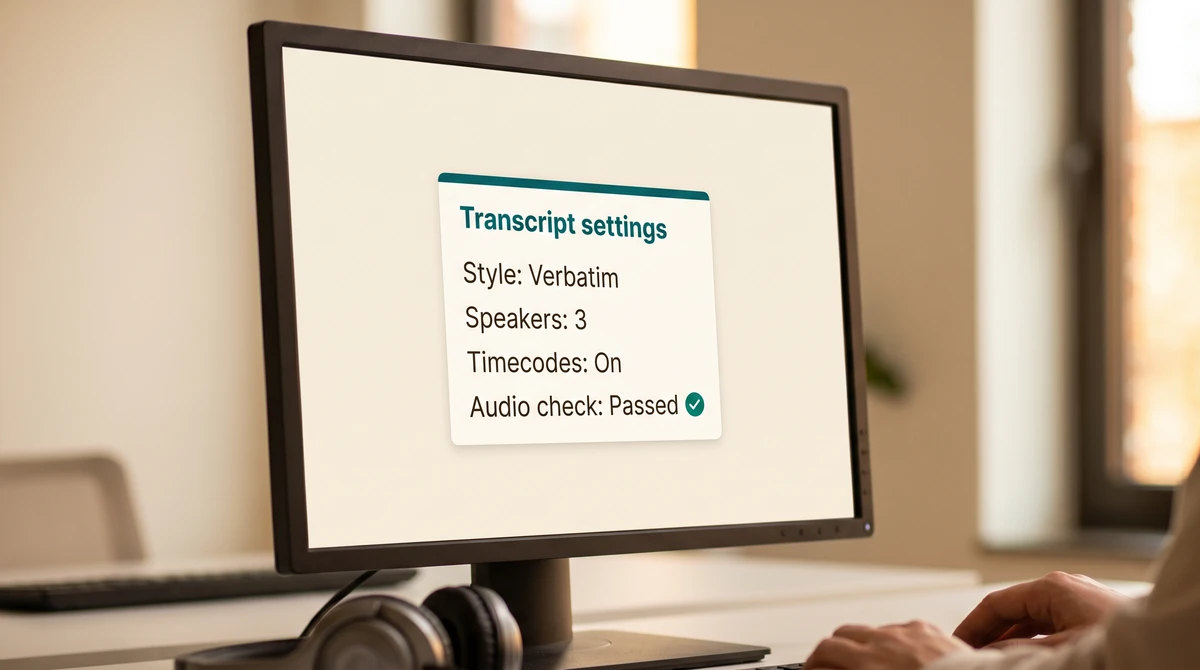
DD confirms transcription scope before production: language, speaker count, audio quality, transcript style (clean-read, verbatim, timecoded, speaker-diarized), output format, and the downstream use - whether the file feeds captions, legal reference, research review, or an AI data pipeline. That scope review prevents a research file, legal recording, training clip, or model dataset from receiving a transcript style that does not match its intended use.
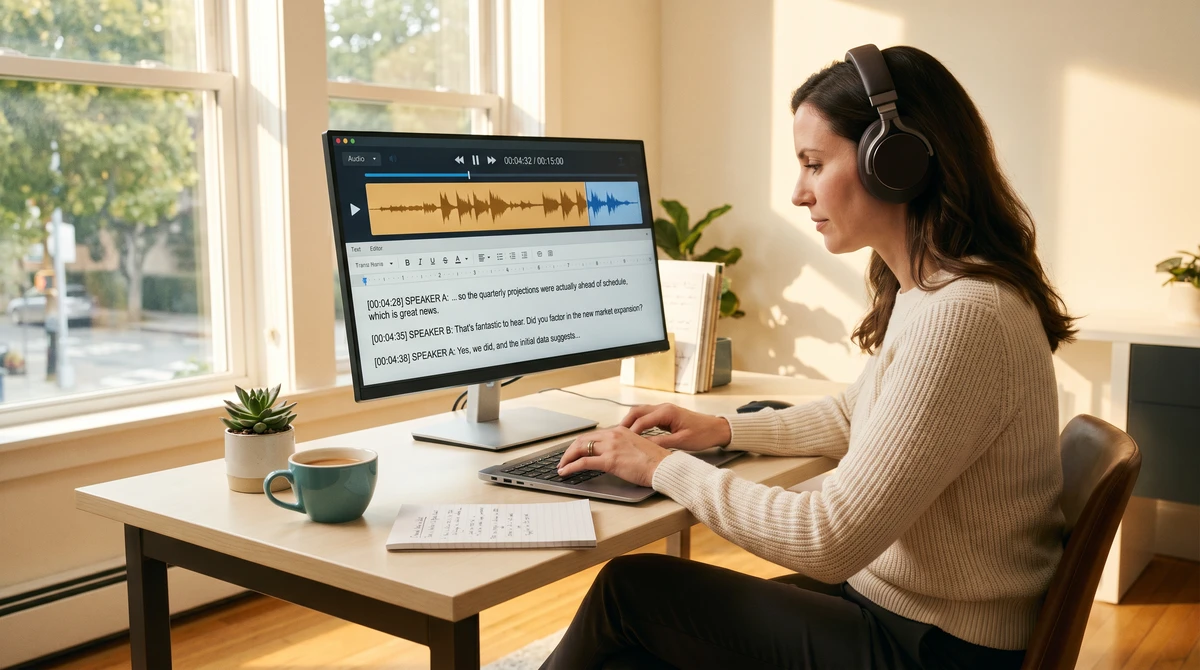
The output style is determined by use, not assumed from the file type. A clean-read transcript removes filler and false starts for readability. A verbatim transcript preserves every utterance for legal or research accuracy. A timecoded transcript anchors text to the audio for caption production or review. A speaker-diarized transcript attributes turns to named or labeled participants. DD confirms which style the downstream workflow requires before production begins.
Audio quality, speaker overlap, background noise, code-switching, dialects, and file length all affect transcription feasibility and effort. DD reviews a sample file at request review - before quoting - to identify these factors. If overlap, noise, or dialect creates a risk for accuracy, DD flags it before accepting the project and states what the accuracy expectation can realistically be for that audio.
For AI data pipelines: transcription output can be scoped to match the pipeline's schema, label format, and downstream annotation requirements. Speaker labels, timestamps, language flags, and quality notes are formatted to the buyer's specification. Rolling-batch delivery is available for ongoing pipelines - files are received incrementally and returned transcribed on a defined cadence.
For regulated and sensitive content - legal recordings, clinical interviews, government proceedings - DD applies NDA controls, role-scoped access, and no-local-retention protocols. Each linguist accesses only the content assigned to them. Access is revoked at project close. Browser-only, no-download workflows are available for content that cannot leave a controlled environment.