
How does DD manage multi-language programs for business clients?
Confirm the contract, coordination contact, pair-specific coverage, approval steps, and any added onboarding for the proposed program.
Business language work can span HR, customer support, legal, marketing, and operations, each with different owners and deadlines. A useful program scope identifies the contact, contract, pair coverage, review plan, and handoffs for the actual work rather than assuming one structure fits every buyer.

This is not a public case study claim. It is DD-owned evidence a buyer can request when the work needs vendor review before a scope is approved.
Ask for proof detailsDD confirms the business function, the audience, the output owner, and the delivery format before production starts. That keeps language work connected to the actual workflow, not separated into a scattered set of vendor requests that no one is accountable for completing on the same timeline.
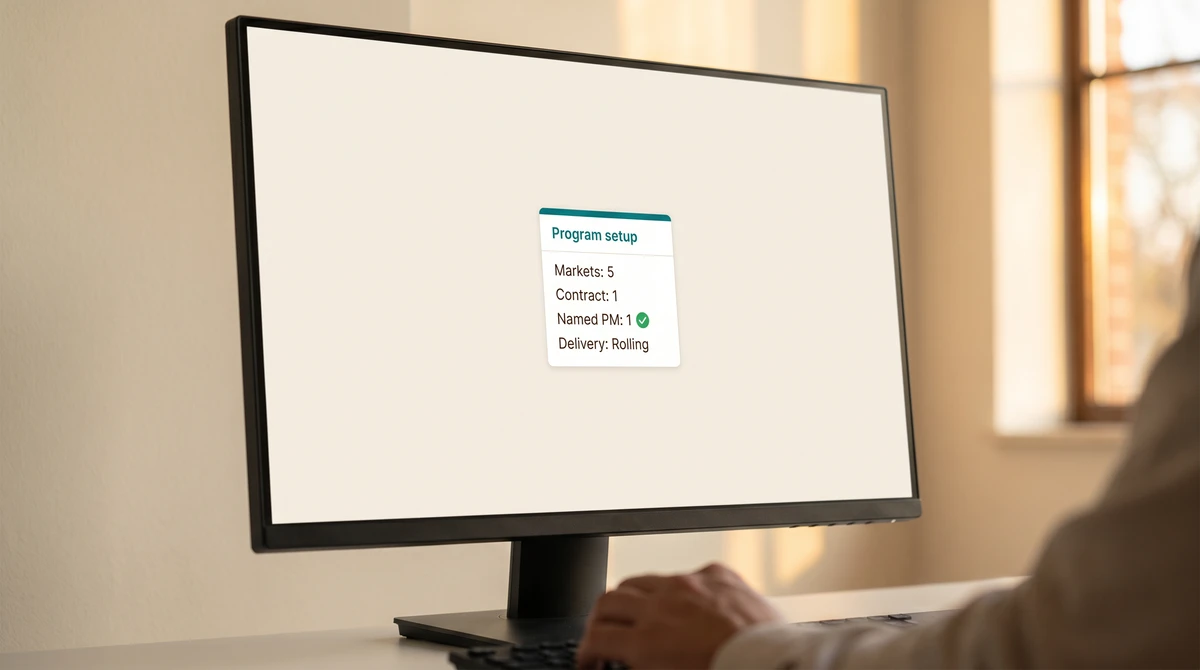
Multi-language business programs often fail at coordination. A market-entry campaign spanning five language pairs needs an owner for terminology, deadlines, approvals, and each delivery. Agree the contracting structure, contact, pair-specific coverage, and added onboarding before expanding the program.
Employee and HR communication requires register and cultural calibration that standard translation does not automatically provide. An employee handbook, a performance review policy, a code of conduct, a benefits guide, and a disciplinary procedure each address a different employment relationship and carry different legal implications in the target locale. Confirm the HR context, employee audience, jurisdiction-relevant concerns, and review owner before localization. For multi-country programs, ask DD to confirm language coverage, contracting structure, coordination contact, and any added onboarding in the written scope.
Customer-facing content and multilingual support workflows require consistency that one-off translation requests cannot sustain. A product description localized for a new market, a support knowledge base maintained across five languages, and a customer notification workflow each need consistent terminology, consistent register, and a delivery model that keeps pace with the source content cycle. DD provides rolling-batch delivery for ongoing programs where content is received incrementally and returned localized on a defined cadence, without requiring a complete source batch before production begins.
For language-company or consulting partners, agree brand presentation, end-client contact, review records, and file handoff in the scope. A test batch or coverage matrix can be discussed after the specific language pair and deadline are known.
Confirm market coverage, contracting, coordination, and staged dates for the proposed program.
Step by step
Share the business function (HR, customer experience, legal, marketing, or operations), audience, language pairs, file or session type, any brand or register requirement, and the delivery owner and deadline.
Confirm the scope, proposed coordinator, pair coverage, contract, and any extra onboarding in writing.
Apply the producer and reviewer roles and terminology decisions agreed for the ongoing program.
One-time projects are delivered under a confirmed timeline. Ongoing programs run on a rolling-batch cadence: content received incrementally, returned localized on a defined schedule.
Set the contract, contact, pair-specific coverage, deadlines, and approval steps for the proposed program.
For changing HR, marketing, or support content, agree when source content is sent and returned and how terminology decisions will be recorded.
Name producer and reviewer roles, error categories, and records needed for vendor approval.
For language-company partners, agree end-client contact and whether DD's work is presented under the partner's brand for the specific engagement.
How this compares
Name the business function, audience, languages, file or session type, brand rules, and deadline. Ask for written coverage, contact, and review terms.
Confirm the contract, coordination contact, pair-specific coverage, approval steps, and any added onboarding for the proposed program.
Rolling delivery can be proposed for ongoing content. Agree the cadence, coordination contact, reviewer roles, and how terminology, register, and brand decisions carry forward.
HR content carries jurisdiction-relevant implications — an employment handbook clause that works in one locale may create ambiguity in another. DD confirms the HR context, the employee audience, the target locale, and the review owner before localization. For legal-adjacent HR content (codes of conduct, disciplinary procedures), the review chain is confirmed with the business owner before production opens.
For supplier negotiations, board meetings, HR interviews, or conferences, confirm modality, setting, qualification, interpreter availability, and a coordination contact before booking.
Agree brand presentation, end-client contact, review records, and file handoff for the business-language engagement. Discuss whether a test batch fits the proposed scope.
Agree producer and reviewer roles, error categories, QA records, and terminology handling for the business content in the written scope.
Share the language pair, file type, audience, or problem. DD replies with availability, open questions, handling notes, and the next step before work starts.