How DD checks it What enterprise buyers need from government/public sector — and how DD delivers it.
DD confirms the agency or program context, the resident audience, the language pairs required, the accessibility requirements, and the publication or proceeding deadline before production starts. Federal agencies, state and local government departments, government contractors, and NGOs operating under grant requirements each carry distinct accountability expectations. DD separates those before production opens.
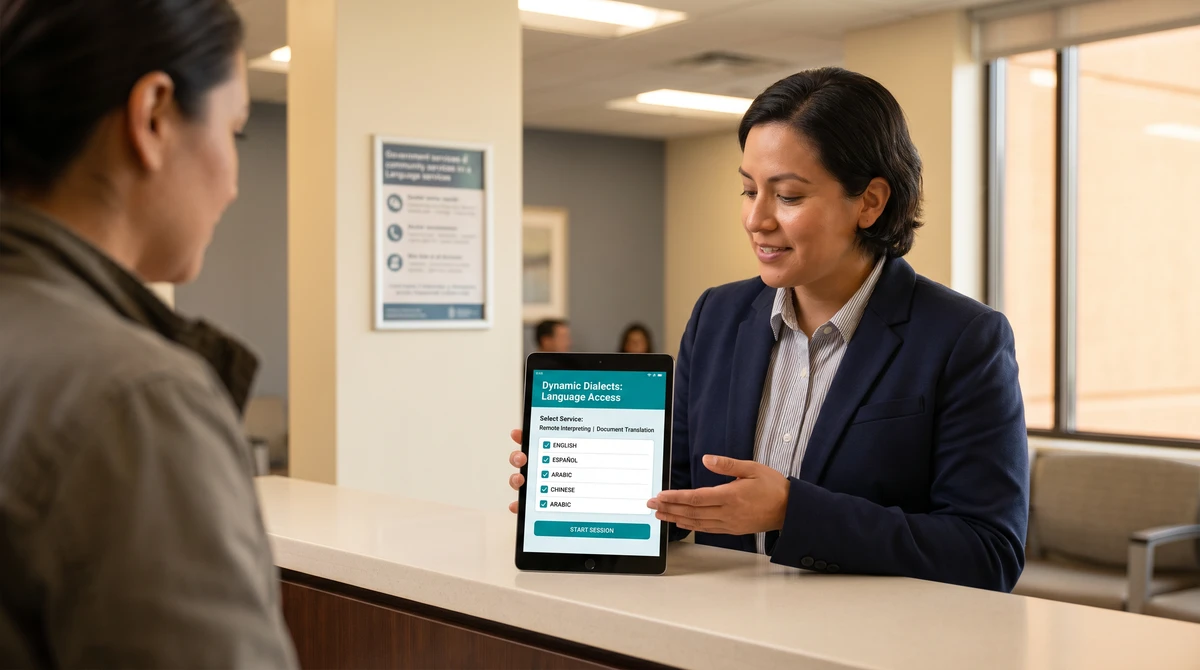
Resident-access translation for public agencies requires plain-language output calibrated to the community, not a generic translated document that the agency then has to revise for readability. Public notices, enrollment forms, benefit instructions, complaint procedures, rights notifications, and official correspondence each carry different urgency levels, different reading-level requirements, and different delivery format standards (print, digital, accessible PDF). DD confirms the resident audience, the agency or program context, and the review owner before the project opens. For agencies with multi-language resident populations, multi-language programs run under a single PM and single contract.
Government hearings, community meetings, board sessions, and administrative proceedings require interpretation that meets the accountability standard for the proceeding type. An interpreter at a public comment hearing, a benefits determination interview, a court-adjacent proceeding, or a law enforcement encounter is part of a documented record. DD confirms language pair, modality, setting, subject matter, qualification expectations, and any access requirement before the booking is committed. Documentation including confirmation records, qualification notes, and any post-session records is available on request.
Accessibility requirements for public-sector media carry legal force that commercial media deadlines do not. Government-produced videos, public health campaigns, emergency preparedness content, and multilingual outreach assets must meet SDH captioning and audio description requirements set by applicable accessibility standards. DD treats accessible media as a production discipline: SDH files include dialogue, speaker labels, sound cues, and music flags; audio description scripts follow timed narration requirements. For emergency or time-sensitive public communications, sprint delivery is available as a scoped engagement, not as a verbal promise.
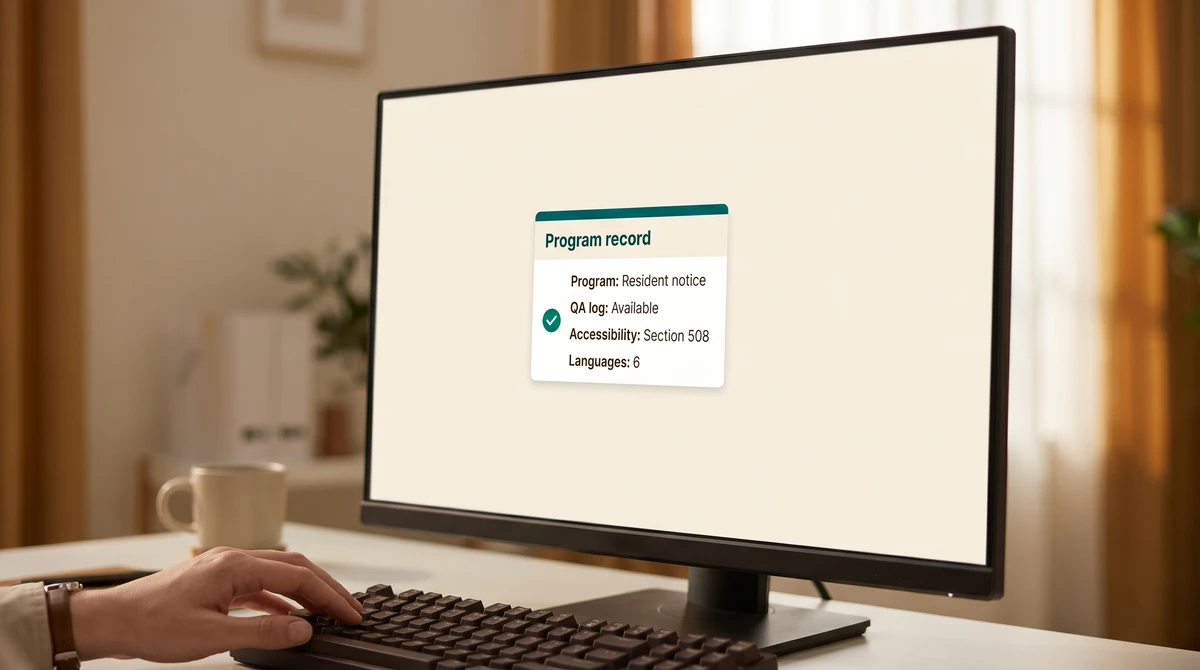
For government contractors and NGOs operating under federal grant requirements: language services must often meet specific vendor qualification criteria, produce auditable delivery records, and operate under program-specific confidentiality or data-handling requirements. DD provides QA documentation and delivery records on request for any project, relevant for agency audit trails, program compliance reviews, and grant deliverable reporting. AI policy is client-configurable; human-only workflows are available where grant or program requirements prohibit AI-assisted production.