
Coverage reviewed per document
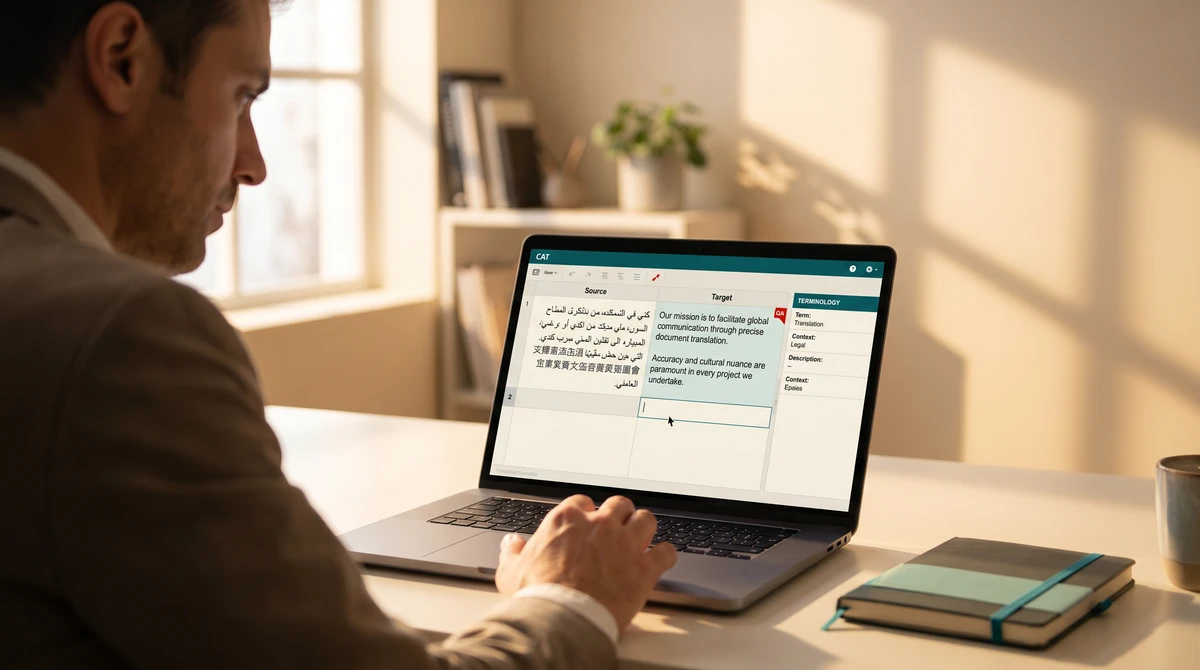
Document translation services
Scope document translation services with audience and certification settled first.
Translate documents for the receiving party (court, agency, insurer, hospital, school, employer, or counterparty) with certification need, file format, terminology, and deadline confirmed in writing before any work begins.
Upload files for a quote
Short form: name, work email, language pair, deadline, and source files or a file link if ready.
Medical, legal, technical, financial, academic, civil
Delivery date confirmed in writing per scope before work begins
Confidentiality controls before file transfer
Dynamic Dialects supports requests across 250+ languages with ISO 9001/27001 operating controls, ISO 17100 applied to translation scopes, 40,000+ vetted linguists, named project coordination, and written confirmation before production work begins.
Evidence for review
What DD can show before a buyer commits.
This is not a public case study claim. It is DD-owned evidence a buyer can request when the work needs vendor review before a scope is approved.
Ask for proof details- Buyer type
- Document translation services document owner, legal ops lead, or compliance manager checking certification, formatting, and delivery rules before sending production files.
- Problem
- The buyer needs scope document translation services with audience and certification settled first. scoped by receiving forum, file condition, certification requirement, language pair, deadline, and delivery format before quote approval.
- Scope
- Document translation services work coordinated by DD with written request review, named PM ownership, and review records matched to the request type.
- Constraint
- This page cannot rely on a public case study yet; it must point to DD-owned proof artifacts and disclosure-safe process evidence.
- DD action
- DD confirms the inputs, missing details, staffing option, quality check, and delivery record before production work begins.
- Evidence available
- Private proof can include a request-specific checklist, redacted QA summary format, delivery record format, and sourcing or reviewer notes.
- Outcome
- The buyer can judge whether DD fits the requirement before sending production files or adding this service to a vendor shortlist.
- Disclosure status
- DD-owned proof only. Public outcomes require client approval; redacted process artifacts can be shared when terms allow.
How the work runs
-
Confirm scope
Receiving party, document type, certification requirement, and deadline recorded in writing before any work begins.
-
Match a subject specialist
Translator selected by domain experience (medical, legal, technical, financial, academic, civil) rather than assigned at random.
-
Translate with terminology preserved
A file glossary is built per matter so key terms, party names, and defined terms render the same way across every page.
-
Run reviewer pass
A second qualified linguist checks the translation against the source for accuracy and terminology consistency before delivery.
-
Certified delivery
Signed certification statement attached when the receiving office requires one; layout preserved (headers, signatures, tables, seals).
What DD checks before quoting
- Source file review Completeness, legibility, format, and any visible damage or quality issues.
- Pair confirmation Source → target language, variant, dialect, and script requirements.
- Purpose check Receiving office, certification or notarization need, and deadline driver.
- QA plan Review type, sample size, sign-off owner, and any client-specific checklist.
- Delivery format File type, naming convention, storage method, and handoff protocol.
- Risk note Known constraints, specialist availability, and contingency if timing shifts.
Example scope — actual checks vary by project type and client requirements.
Each document translation project starts with a written request check confirming receiving party, document type, language pair, certification requirement, terminology preferences, deadline, file format, and confidentiality controls. Translators are matched to the document subject (medical, legal, technical, financial, academic, civil) rather than assigned at random. Files are handled under NDA on request, with named-translator handling for sensitive matters. Turnaround for a 1–5 page record is confirmed in writing per scope before work begins; longer files and certified work are quoted with a confirmed delivery date in writing.
For document work, DD checks the receiving office, file condition, certificate wording, handling needs, and file format.
What this page helps you send
- Civil-status records (birth, marriage, divorce, death) for USCIS, court, agency, or insurer use.
- Legal documents (contracts, pleadings, evidence, affidavits) with receiving forum confirmed first.
- Medical records (discharge notes, consent, lab reports, insurance documents) with privacy controls.
- Academic records (transcripts, diplomas, evaluation sets) for admissions or licensing.
- Financial documents (audited statements, tax records, KYC files) with terminology preserved.
- Technical documents (specs, manuals, datasheets, patents) with glossary applied across pages.
- Business documents (proposals, correspondence, internal memos) for cross-border programs.
- Multi-document filing sets with consistent name spelling and terminology across every page.
What you receive
- Translated document with source layout preserved (headers, signatures, tables, seals).
- Signed certification statement when requested for USCIS, court, agency, or administrative use.
- Translator notes for illegible text, seals, stamps, or terminology decisions made during the work.
- Glossary of key-term decisions for the file (parties, defined terms, technical vocabulary).
- PDF delivery suitable for the receiving office, plus editable file on request.
Questions teams ask first
What document types are handled?
Civil-status records (birth, marriage, divorce, death), legal documents (contracts, pleadings, evidence, affidavits), medical records (discharge, consent, labs, insurance), academic records (transcripts, diplomas, evaluation), financial documents (statements, tax records, KYC), technical documents (specs, manuals, patents), and business documents (proposals, correspondence). Specialist pages cover each domain in more depth.
What is the difference between certified, notarized, and sworn translation?
A certified translation has the translator's signed statement of accuracy and competence; this is what USCIS requires. A notarized translation adds a notary public's acknowledgment of the translator's signature; the notary does not certify the translation itself. A sworn translation is the European concept where a court-appointed sworn translator's seal makes the translation legally binding; the US does not use sworn translators in this sense.
How are subject-matter translators matched?
Translators are matched to the document subject by domain experience (medical, legal, technical, financial, academic, civil). A medical record never goes to a generic translator; a legal filing never goes to a translator without legal-document experience. The match is recorded in the project file so future work for the same subject can stay with the same name when available.
How long does document translation take?
Turnaround for a 1–5 page record (one document, single language pair, clean scan) is confirmed in writing per scope before work begins. Longer files, certified work, multi-document filing sets, and rare-language work are quoted with a confirmed delivery date in writing. Expedited turnaround is available when scheduled at the time of request.
How is confidentiality handled?
An NDA is signed before any file transfer when requested. Files are kept on access-restricted storage, named-translator handling is available for sensitive matters, and files are deleted on a defined schedule after project close. Confidentiality terms can be aligned with a matter's protective order on request.
Can a prior glossary or translated reference be reused?
Yes. Share the glossary, prior translated documents, defined-term lists, or style preferences when you send the project details. A file glossary is built per matter so the same key terms, party names, and defined terms render the same way across every document in the filing.
What output formats are supported?
PDF is the standard delivery for documents going to a receiving office. Editable files (DOCX, ODT) are available on request. For technical and business documents, source-format delivery (XLSX, PPTX, IDML, XLIFF) is supported when the workflow requires it.
Can a multi-document filing be handled as one project?
Yes. Multi-document sets are handled with consistent name spelling, defined-term rendering, and terminology decisions applied across every page in the set. A summary of the decisions is delivered alongside the translated documents so the receiving party sees the same vocabulary throughout.