
Script, reference, timing, audience
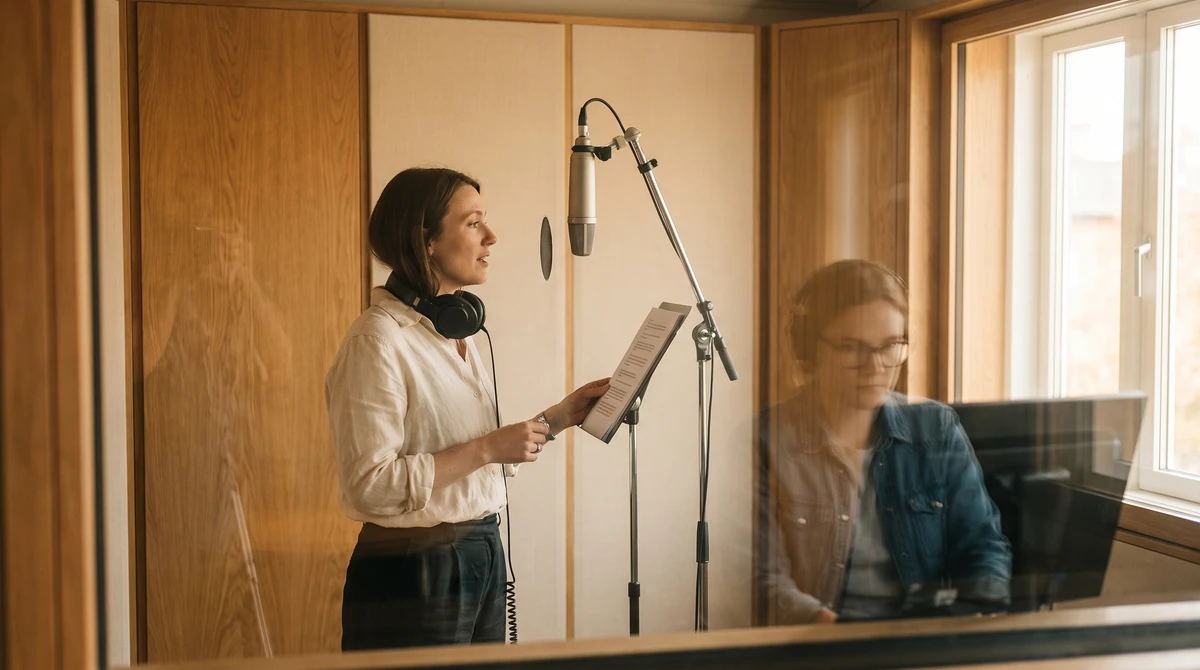
Voice-over localization
Scope voice-over localization before recording starts.
Move a script into another language and recording plan with audience, tone, timing, and file format confirmed first.
Upload files for a quote
Short form: name, work email, runtime, platform, target languages, and media files or links if ready.
Narration or synced voice-over
Coverage checked before DD confirms the work
Dynamic Dialects supports requests across 250+ languages with ISO 9001/27001 operating controls, ISO 17100 applied to translation scopes, 40,000+ vetted linguists, named project coordination, and written confirmation before production work begins.
Evidence for review
What DD can show before a buyer commits.
This is not a public case study claim. It is DD-owned evidence a buyer can request when the work needs vendor review before a scope is approved.
Ask for proof details- Buyer type
- Voice-over localization media producer, localization manager, or accessibility lead checking runtime, platform format, speaker rules, and output spec before production.
- Problem
- The buyer needs voice-over localization scoped by runtime, platform, target languages, speaker treatment, timing constraints, and output files before quote approval.
- Scope
- Voice-over localization work coordinated by DD with written request review, named PM ownership, and review records matched to the request type.
- Constraint
- This page cannot rely on a public case study yet; it must point to DD-owned proof artifacts and disclosure-safe process evidence.
- DD action
- DD confirms the inputs, missing details, staffing option, quality check, and delivery record before production work begins.
- Evidence available
- Private proof can include a request-specific checklist, redacted QA summary format, delivery record format, and sourcing or reviewer notes.
- Outcome
- The buyer can judge whether DD fits the requirement before sending production files or adding this service to a vendor shortlist.
- Disclosure status
- DD-owned proof only. Public outcomes require client approval; redacted process artifacts can be shared when terms allow.
How the work runs
-
Submit script and scope
Send the source script or video, target languages, audience description, preferred tone (warm instructional, formal authoritative, conversational), timing constraints, and required audio format (WAV, MP3, AIFF, broadcast spec).
-
Script adaptation and timing review
Script is adapted for target-language timing, natural cadence, and audience fit. A pronunciation guide is prepared for names, brands, and technical terms. Timing is checked against the source video to confirm read-length fits the available window.
-
Voice casting and direction
Native voice talent is matched to the agreed tone and audience. The voice director shares pronunciation notes, style references, and any client-specific direction before the recording session is scheduled.
-
Recording and audio QA
Recording happens in a treated studio or an approved home studio meeting the agreed audio specification. The audio engineer checks noise floor, signal levels, plosives, and spec compliance on every take before the clip is accepted.
-
Review and deliver
A review round checks timing, pronunciation, and tone against the source. Final files are delivered in the requested format with delivery notes (sample rate, bit depth, channel layout) and a pronunciation glossary for future episodes.
What DD checks before quoting
- Source file review Completeness, legibility, format, and any visible damage or quality issues.
- Pair confirmation Source → target language, variant, dialect, and script requirements.
- Purpose check Receiving office, certification or notarization need, and deadline driver.
- QA plan Review type, sample size, sign-off owner, and any client-specific checklist.
- Delivery format File type, naming convention, storage method, and handoff protocol.
- Risk note Known constraints, specialist availability, and contingency if timing shifts.
Example scope — actual checks vary by project type and client requirements.
Dynamic Dialects confirms file handling, security notes, quality-check notes, timing, and file format in writing before work begins, so the team knows what will be delivered and what still needs review.
For media work, DD checks source quality, timing, platform format, speaker treatment, and output files before quoting.
What this page helps you send
- Training videos, product demos, education modules, explainers, and internal media.
- Script translation, adaptation, recording request, and review-ready audio.
- Narration where timing, audience, and style need advance agreement.
- Multilingual voice-over packages built from one source script.
What you receive
- Localized script.
- Voice-over recording request.
- Audio delivery notes by format.
Questions teams ask first
Is voice-over the same as dubbing?
Voice-over usually prioritizes clear narration. Dubbing usually needs tighter timing, scene matching, and performance review.
What should be sent for a quote?
Send the source video, script if available, target language, preferred voice direction, deadline, and audio format.